
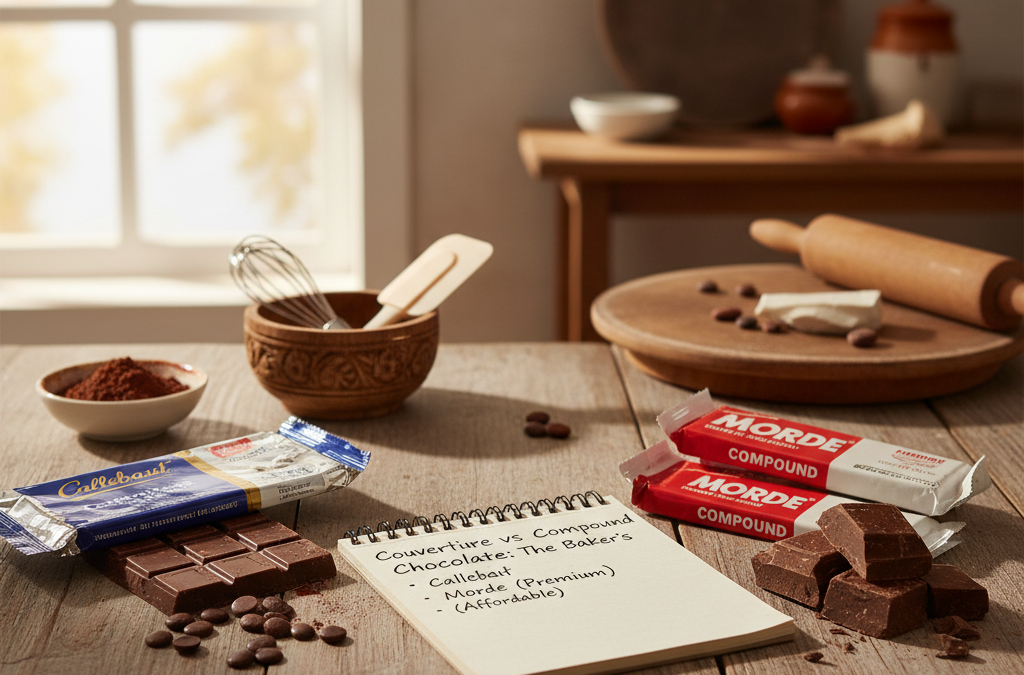
Couverture vs Compound Chocolate Price India: Which One Should You Choose?
If you are a home baker in India, you’ve likely stood in front of your pantry—or scrolled through the Foodoga app—wondering why one slab of chocolate costs ₹150 while another costs ₹800. In the world of Indian baking, the debate between Couverture vs Compound chocolate is more than just about taste; it is about margins, technique, and the final 'wow' factor for your customers.
Whether you are making a simple tea-time cake or professional-grade bonbons, understanding the difference between these two is vital for your success. In this guide, we break down the science, the price points, and the best brands available in India today.
What is the Real Difference?
To understand the couverture vs compound chocolate price in India, we first need to look at the ingredients.
1. Compound Chocolate (The Budget-Friendly Workhorse)
Compound chocolate replaces cocoa butter with vegetable fats (like palm oil or hydrogenated fats). This makes it incredibly easy to use in India’s tropical climate because it has a high melting point. Brands like Morde and 2M Cocoa are staples in Indian households.
2. Couverture Chocolate (The Gold Standard)
Couverture is the real deal. To be called couverture, it must contain a minimum of 31% cocoa butter. This high fat content gives it that signature snap and a melt-in-the-mouth texture that vegetable fat simply cannot replicate. Shop our premium couverture range.
Couverture vs Compound Chocolate Price in India (2024 Trends)
Price is often the deciding factor for many starting their home-baking journey. Here is a general comparison of what you can expect to pay per kilogram in the Indian market:
| Chocolate Type | Popular Brands | Approx. Price per Kg (INR) |
|---|---|---|
| Compound | Morde, 2M, Vanleer | ₹180 - ₹350 |
| Indian Couverture | Amul, Mason & Co | ₹600 - ₹1,200 |
| International Couverture | Callebaut, Valrhona, Belcolade | ₹1,100 - ₹2,500 |
Note: Prices fluctuate based on cocoa commodity rates and import duties. Foodoga offers competitive wholesale pricing for bulk orders with same-day delivery in Pune.
The Best Chocolate for Baking in India: Which to Use When?
Choosing the best chocolate for baking in India depends on your specific application and your customer's budget.
Use Compound Chocolate When:
- Making Ganache for Budget Cakes: If you are selling a 1/2 kg cake for ₹400, compound is your best friend.
- Decorations in Summer: In cities like Mumbai or Chennai, compound decorations hold their shape better without melting instantly.
- Beginner Practice: If you are just learning how to pipe or melt chocolate, start with Morde.
Use Couverture Chocolate When:
- Professional Pralines & Truffles: The mouthfeel of real cocoa butter is essential here.
- High-End Gifting: For Diwali or wedding hampers, couverture adds a premium touch.
- Health Conscious Clients: Couverture lacks the trans-fats often found in hydrogenated vegetable oils used in compounds.
The Battle of Brands: Morde Chocolate vs Amul
In the Indian context, the Morde chocolate vs Amul comparison is a hot topic. Morde is the undisputed king of compounds—reliable, widely available, and easy to melt. Amul, on the other hand, has disrupted the market with their dark chocolate bars and professional couverture buttons. Amul offers a great "middle ground" for those wanting to move away from compound without the high price tag of imported Belgian chocolate.
Pro Tips from Foodoga for Tempering in Indian Humidity
Tempering chocolate in Indian humidity is the biggest challenge for any pastry chef. Humidity acts as the enemy of chocolate, causing it to seize or bloom (those white streaks you see).
- AC is Not Optional: If you are working with couverture, keep your room temperature between 18°C - 22°C.
- Avoid Steam: Always melt chocolate using a double boiler (bain-marie) but ensure the water is not boiling vigorously. Even a drop of steam can ruin a batch of Callebaut.
- The Seed Method: For home bakers, the seeding method is the easiest way to temper. Add un-melted chocolate callets to your melted chocolate to bring the temperature down and stabilize the crystals.
Foodoga Pro Tip: Always check for the FSSAI logo and the manufacturing date. Fresh chocolate has better fluidity. If you are a professional in Pune, we are your go-to Callebaut chocolate suppliers Pune, ensuring fresh stock arrives at your doorstep the same day.
Conclusion
While compound chocolate is practical and cost-effective for everyday bakes, couverture is the secret ingredient that elevates a baker to a chocolatier. If your budget allows, try mixing them or using the 70/30 rule—70% compound for the base and 30% couverture for the flavor profile.
Ready to upgrade your pantry? Whether you need 500g for a weekend project or 10kg for your bakery, Foodoga delivers the finest ingredients across India.
Frequently Asked Questions (FAQs)
1. Can I replace compound with couverture in any recipe? Not directly. Couverture has more fat and behaves differently. You may need to adjust the liquid ratios in your recipe, especially for ganache.
2. Why is my chocolate turning white? This is called 'bloom.' It happens when the chocolate is stored in varying temperatures or wasn't tempered correctly. It is still safe to eat but doesn't look professional.
3. Is Amul chocolate couverture or compound? Amul produces both. Their dark chocolate bars (55%, 75%, 90%) are closer to couverture/real chocolate, while they also have industrial products that are compounds. Always check the ingredient list for 'cocoa butter' vs 'vegetable fat'.
4. Where can I buy bulk Callebaut in Pune? Foodoga is one of the leading Callebaut chocolate suppliers in Pune, offering various cocoa percentages (54.5%, 70.5%, and White) with same-day delivery options.
5. Does couverture chocolate expire? Dark couverture has a shelf life of about 18-24 months if stored in a cool, dark place. Milk and White chocolate have shorter shelf lives (12 months) due to the milk solids.